
E-commerce SEO
E-commerce SEO aims to get product and category pages found in both search engines and AI-powered search. For Beton Store and Boon Fresh we built the product catalog together with SEO optimization; the goal was for sales not to depend on ad budget alone. Technical SEO, schema markup and content structure are handled together.
The most common SEO problems we see in e-commerce
Products don't show up on Google; sales end up entirely dependent on ad budget and social media posts.
When category pages get duplicated through filter parameters, duplicate content confuses search engines.
Newly added products stay unindexed for a long time, so seasonal sales opportunities never show up in search traffic.
How we work
E-commerce SEO calls for a different structure than general corporate site SEO: the number of product and category pages grows fast, filter parameters carry duplicate-content risk, and stock status changes often. Technical SEO here ensures crawlability, correct indexing and schema markup make clear to search engines what a product is; content SEO structures category pages around search intent. Once product pages run into the hundreds, this structure becomes sustainable only through templates and automated meta generation, not manual work -- otherwise every new product turns into a separate manual task. Protecting Core Web Vitals on image-heavy product pages is an inseparable part of this structure too, since a slow-loading page falls behind in search as well.
For Beton Store we built a catalog of construction materials and concrete products together with product catalog, order management and contact systems, and drove organic traffic growth through SEO optimization. For Boon Fresh we supported a fast ordering flow on a fresh food and grocery delivery platform with SEO optimization and grew organic traffic. On both projects the goal was for sales not to depend on a single channel (ads); as the catalog grew we kept SEO work current alongside it rather than leaving it as a one-time setup. As products were added, page structure and meta information adapted automatically to the new product with no extra manual intervention needed; neither store had to rebuild its SEO work as its catalog grew.
On the results side, the goal is for product and category pages to show up with accurate information in both classic and AI-powered searches (GEO). Direct-answer product descriptions and structured data also help LLM-based shopping assistants recommend the right product. This gives the store a structure where traffic doesn't stop when ads stop -- organic traffic becomes a channel added on top of ad budget, reducing dependence on it even if it doesn't fully replace it. Being able to track which product page came from which search lets you update strategy with data instead of guesswork and move forward on measurable signals, prioritizing your budget accordingly; the same data also shows which category needs more work.
What this solution includes
- Custom technical SEO for product and category pages -- crawlability, indexing and duplicate-content fixes.
- Product/Offer schema markup surfaces price and stock information in search results.
- Core Web Vitals optimization keeps image-heavy product pages fast.
- Visibility is built in AI-powered shopping searches (GEO) with accurate information.
- Category pages are structured around search intent, so sales don't depend on ads alone.
Related projects
View all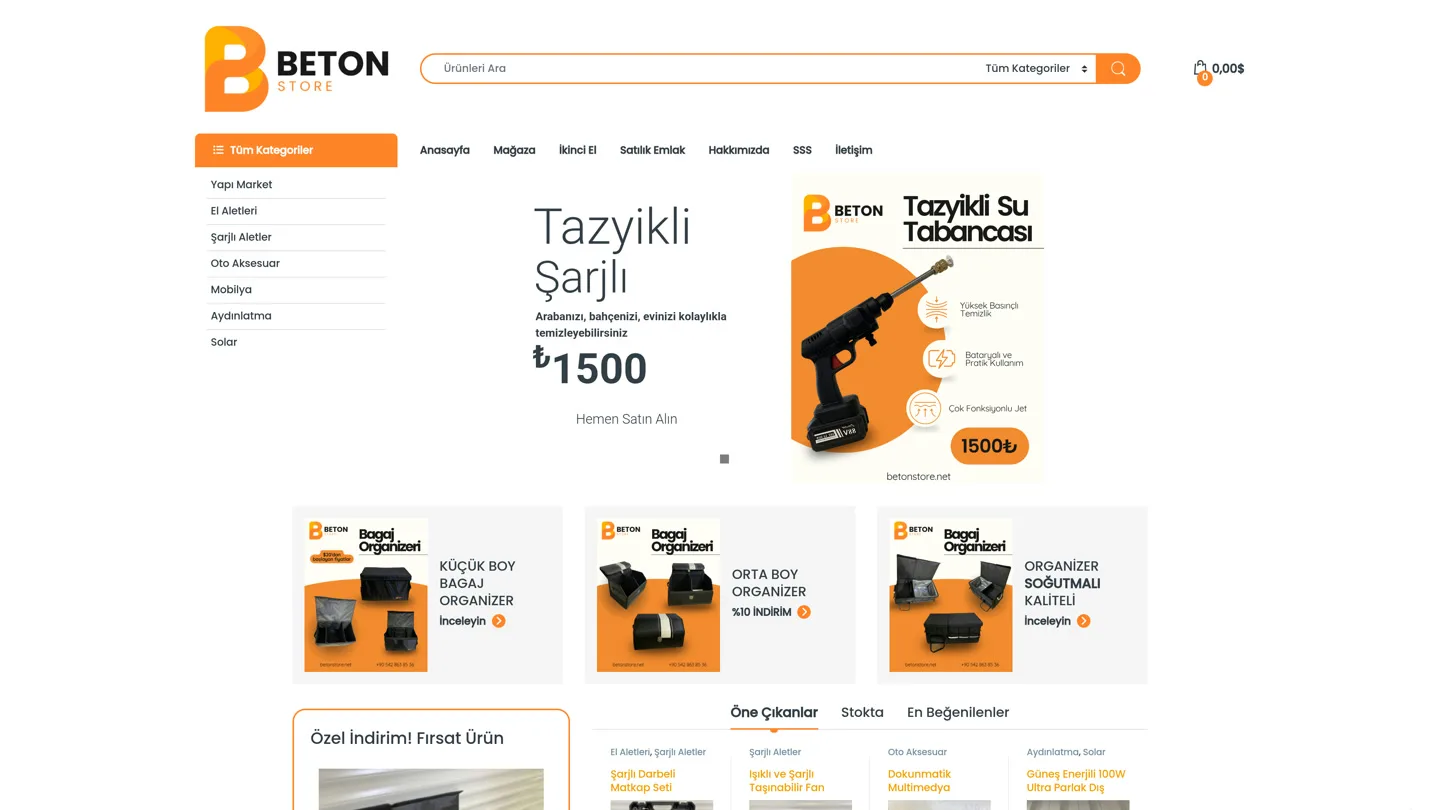
Service
Frequently asked
Industry and related solutions
Other solutions
Let your products be found in search independent of ads -- let's talk about e-commerce SEO work.
Describe what you need; we’ll reply within 24 hours with a concrete roadmap.