
ERP for Construction Companies
A construction ERP shows which subcontractor is working on which project, what's owed based on completed progress, and how much material has gone to which site — all from one system. We don't have a construction-sector project at this scale yet; we adapt the production/dealer tracking from FurCRM and the stock/accounting back-office from Ambalaj Cini to a construction workflow.
Where construction firms lose track of process
When subcontractor payments are calculated by hand in a spreadsheet, the gap between completed work and amount paid surfaces too late.
When material deliveries are logged in separate sheets per site, no one can see how much material a given project has actually consumed.
When several projects run at once, which subcontractor is on which job lives only in the site manager's memory.
How we work
Construction companies typically run several projects at once, each with its own subcontractor network, material flow, and payment schedule. When that complexity is managed in spreadsheets, information about how much of a scope a subcontractor has completed — and how much they've been paid against it — stays scattered; progress-payment calculations get delayed or miscalculated. Material tracking has the same problem: when deliveries are tied to a supplier rather than a project, no one can see how much material a given project has actually consumed. A construction ERP unifies these three data points — project, subcontractor, material — in one model, so management sees which project is straining budget early, not late.
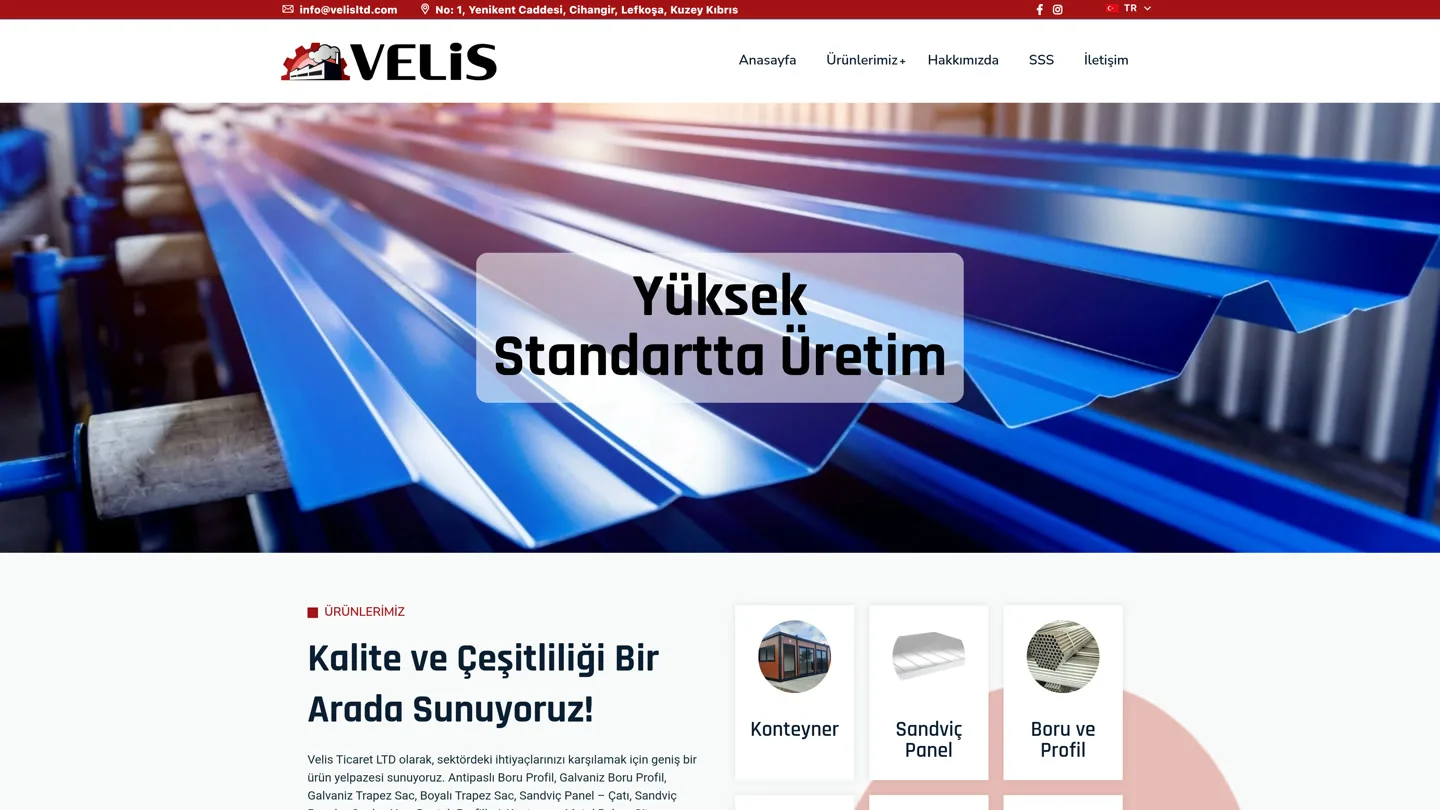
We don't have a construction-sector ERP delivered yet — we say that plainly. But the production tracking, dealer management, and accounts/finance modules we built for FurCRM in the furniture industry — tracking what stage a job is at and who owes what to whom — apply the same logic to subcontractor and progress-payment tracking. The stock and accounting integration we built into Ambalaj Cini's back-office is a direct reference for material in/out tracking too. We've already worked in construction on the web side — Velis LTD's corporate site — so we know the sector's terminology and workflow; what's missing is simply that this specific ERP hasn't been built before.
We start by mapping how your company calculates progress payments and structures subcontractor agreements — we don't offer tax or contract-law advice here; we encode the calculation logic you define. Project, subcontractor, and material modules are built in sequence; existing spreadsheet data migrates into the new system. Scope depends on how many concurrent projects and how large your subcontractor network is; a small firm might need only project and payment tracking, while a larger one prioritizes material tracking and role-based access sooner. We test the system against real site data before handover.
What this solution includes
- Project-level view — each site is tracked as its own record, with its own budget, progress, and assigned subcontractors.
- Subcontractor management — which subcontractor took on which scope, at what price, and how much has been paid, on one screen.
- Progress-based payment tracking — payments are logged against the percentage of work actually completed.
- Material in/out tracking — material delivered to site is tracked per project, similar to the stock/variant logic we built for FurCRM.
- Role-based access — site manager, accounting, and management connect to the same system with different permissions.
Related projects
View all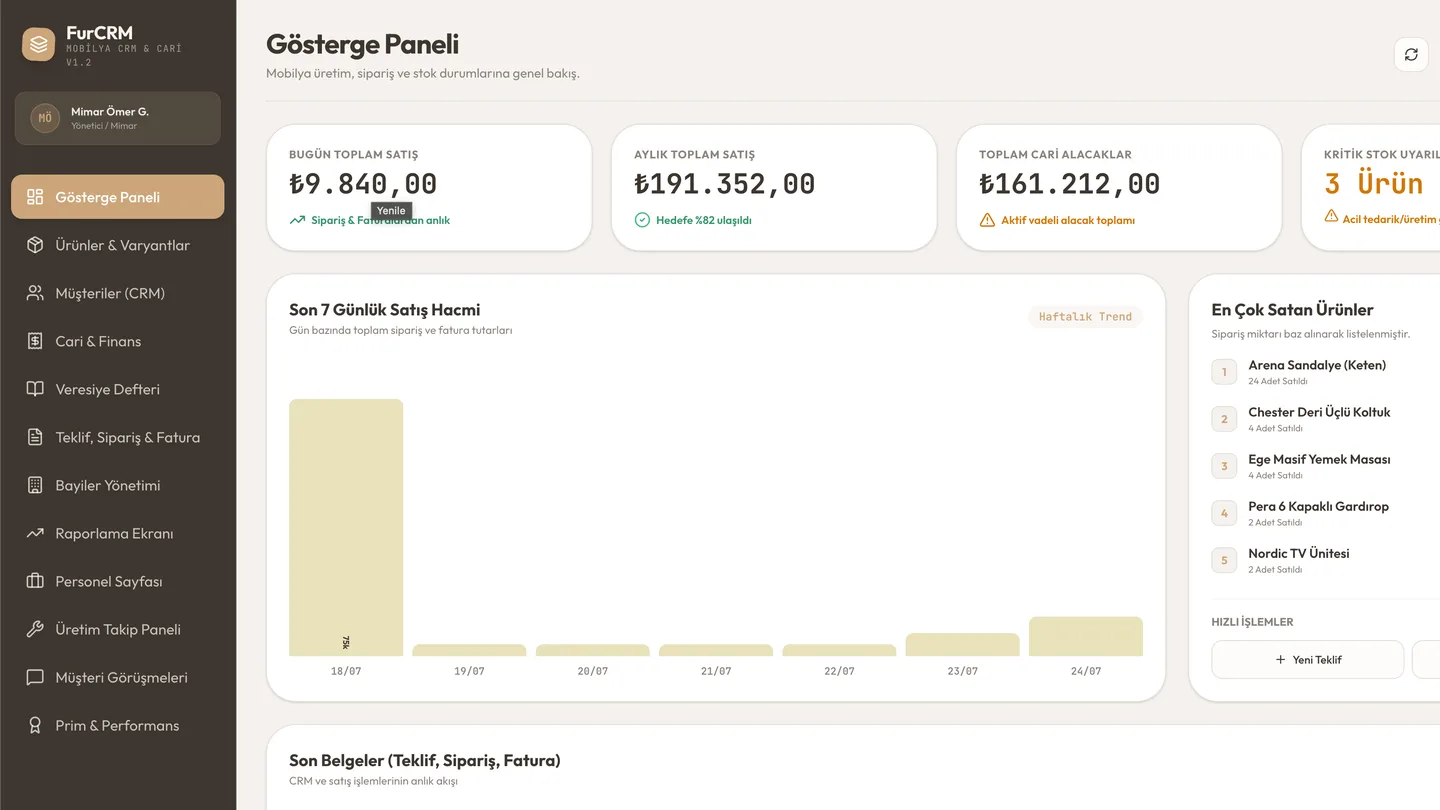
Service
Frequently asked
Industry and related solutions
Other solutions
Get subcontractor and progress-payment tracking out of spreadsheets — let's talk about your construction ERP.
Describe what you need; we’ll reply within 24 hours with a concrete roadmap.